Every account worked on its day. Your team decides how.
Able Collect is the credit and collections desk. Every account with its invoices, promises, disputes and mail on one page, and the day’s work in order. Mason, the collections agent, works a portfolio of his own: he writes the follow-ups, reads every reply and hands a person what needs one. He sends under a policy your team approved, and anyone on the team can take an account back.
What the desk gives your team
One desk for the whole portfolio.
The collectors keep the accounts that need their judgement. Mason carries the mechanical part of the rest, and every step he takes is on the account for anyone to read.
Invoices, payments, contracts, promises, disputes, contacts and every mail of each customer on one record, read from the invoicing system you already run.
Which accounts to work today, by aging and by what was promised, and each promise to pay chased on its date, kept, partial or broken.
Mason looks at each of his accounts on its day and writes the follow-up it needs, in its order, in the house letter.
A customer’s answer is read and filed under its account. Mason records the promise, opens the case for the cash team, answers the customer or hands the mail to a person.
The collectors ask the desk what they would ask a colleague, which promises fall due this week or what a customer said last, and it answers from the live accounts.
What Mason may send alone is a policy your team approved once. A letter outside it waits for its decider, a complaint or a dispute goes to a person as a task, and anyone can take an account back.
How an account runs
Mason does the legwork. A person keeps the judgement.
Each account Mason works runs the same loop. He holds a letter while the account has an open dispute, a promise not yet due, a recent payment or a colleague’s call that has no outcome yet.
Able Collect · one account, one day
Who wrote to each past-due account this week, and what did each one answer?
Invoices, payments and promises are read into the account
Looks at each account of his portfolio on its day
Writes the follow-up it needs, with his reason
Approved once what goes out alone; the rest waits for its decider
Reads the reply, records the promise or opens the case
Takes what needs a person, or the whole account back
The real screens
The screens your team works in.
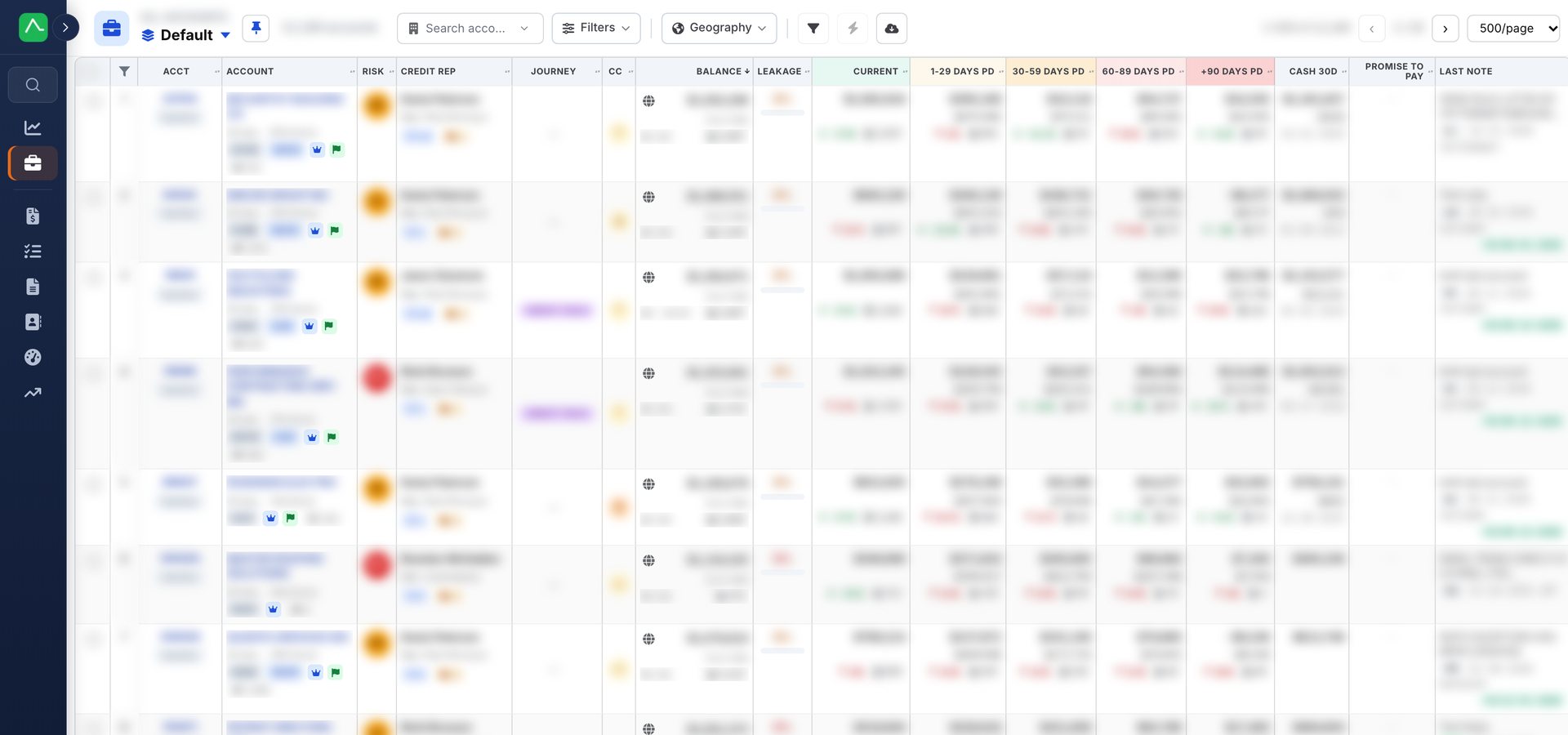
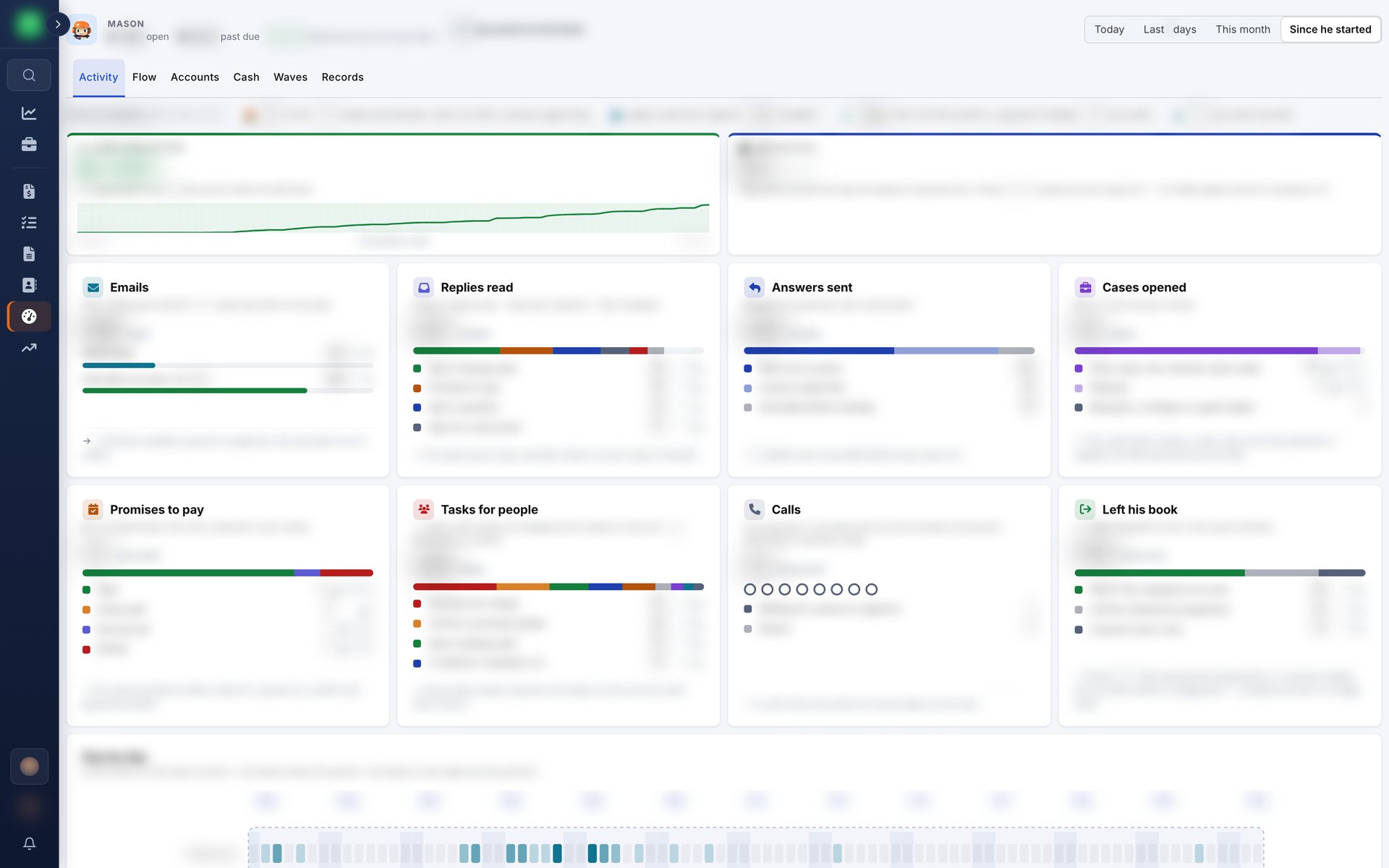
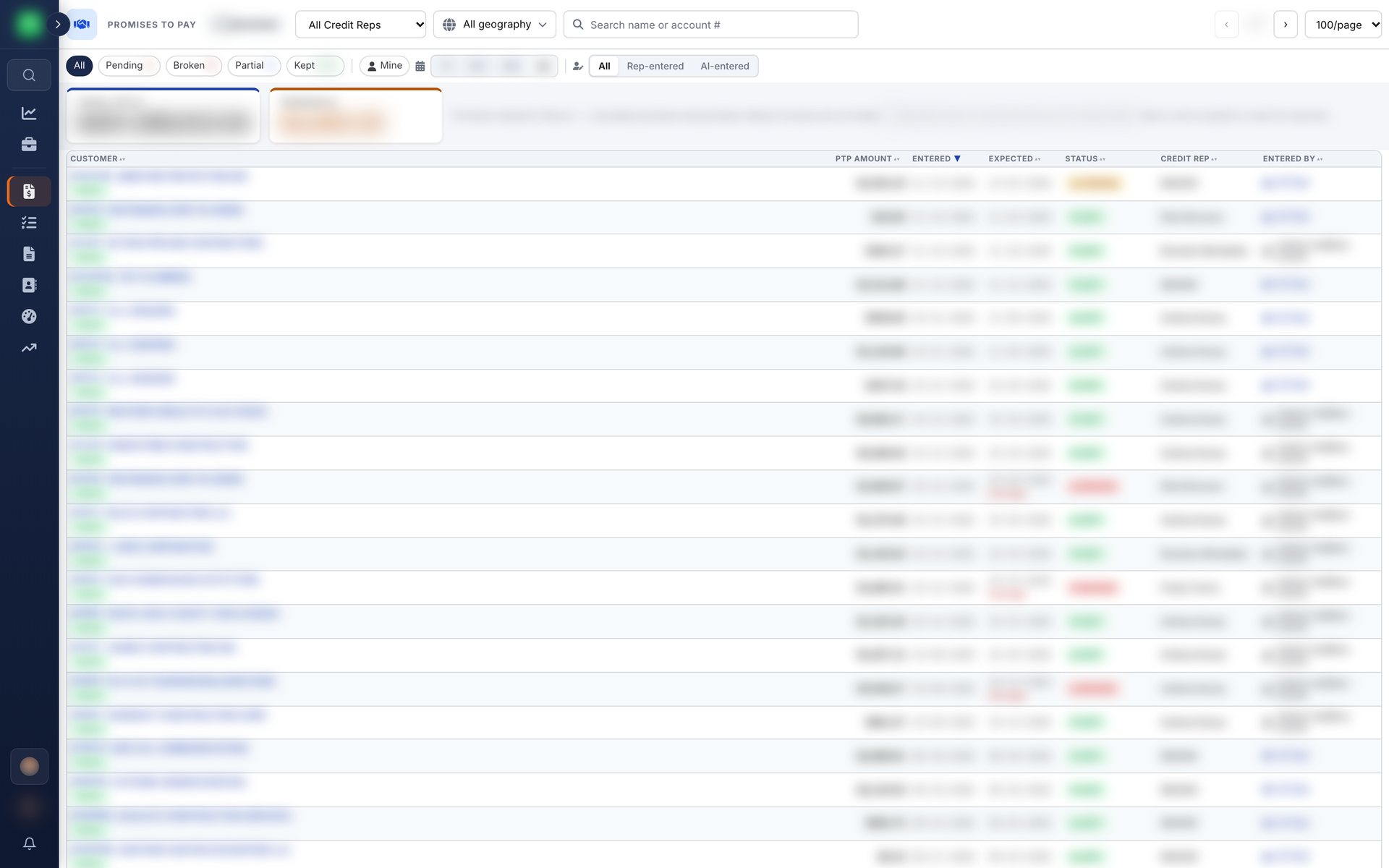
The customer’s data is blurred. The screens are the application as its people use it.
The receipts
What came out at Sunstate Equipment.
Our measurement is against a control group. The two outcomes are the director’s own words.
Past-due dollars paid within seven days on the accounts the agent contacted; 8–11% → 14% on untouched accounts.Our own measurement against a control group, July 28 to September 30, 2026.
Accounts and 1,501 e-mails in that measured window.The same measurement, July 28 to September 30, 2026.
Fewer accounts passed to outside collections.Sean Stevens’ own words, approved October 24, 2026.
Of bad debt reduced, three in a row.Sean Stevens’ own words, approved October 24, 2026.
The AI does the heavy lifting. The team concentrates on using their skills.
Sean Stevens, Director of Credit and Collections, Sunstate Equipment
Who it is for
Four industries, four ways to be paid late.
Each page shows what collections looks like in that industry and how the desk works it.
Resources
Free, and useful before any call.
Playbooks, calculators and articles written for credit and collections teams, whether or not they ever use the desk.
Playbooks
Workflows, letters and call scripts for one industry each.
Book a walkthrough
Bring one process.
Leave with a working screen.
Bring your aging report, your worst ticket or the spreadsheet everybody is afraid of. The walkthrough shows the desk on a sample of it on the same call.